5 Best Bowling Balls for Beginners and League Play in 2026
Five current bowling balls for first-time buyers, developing league bowlers, heavier oil and straight spare shooting, with honest advice on who each one suits.
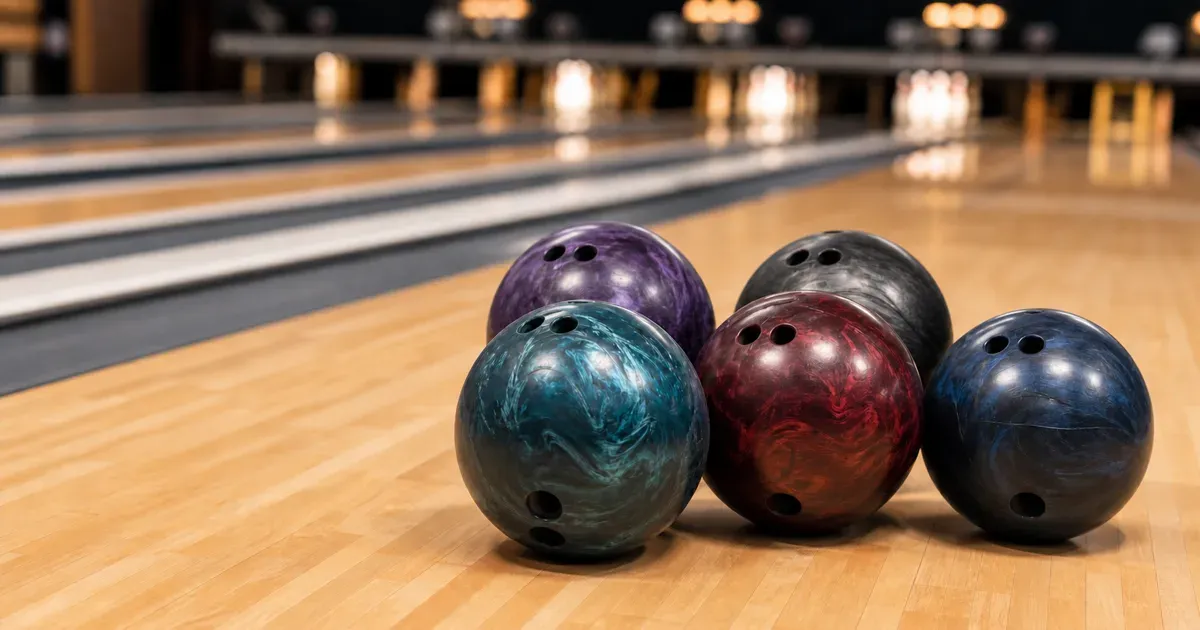
Buying your first bowling ball is easy to get backwards.
The most aggressive ball in the shop is not automatically the best one, and a ball that looks perfect in a review may be far too strong for your speed, rev rate or the lanes at your local centre. You also need to remember that most new bowling balls are sold undrilled, so the price of a proper fitting and drilling belongs in your budget.
This is not a list of five brand-new 2026 releases. It is a list of balls that are still current and worth buying in 2026, including a few older designs that have stayed in production because they continue to work.
For most bowlers who are ready to move beyond house balls, we would start with the MOTIV Venom Shock. It is a controllable benchmark reactive ball for light to medium oil and gives a developing player useful feedback without demanding the biggest possible hook. If you are brand new and still learning to create a release, the Storm Tropical Surge is a gentler first step. If you mainly need a straight spare ball, choose the Brunswick TZone Black / Purple / Silver instead.
Here are the five bowling balls worth considering before you book a fitting.
The five bowling balls worth considering
MOTIV Venom Shock
The best benchmark choice for a serious first reactive ball
Storm Tropical Surge
The easiest reactive ball for beginners and lighter oil
Storm Phaze II
A proven option for medium-heavy oil and tournament conditions
Brunswick Danger Zone
Stronger all-purpose reaction for bowlers who have outgrown entry-level equipment
Brunswick TZone Black / Purple / Silver
A straight, durable polyester ball for spares or a first purchase
What matters when choosing a bowling ball?
Bowling-ball specifications only make sense when you connect them to your own delivery. Before comparing cores and coverstocks, work out what kind of ball you can control and what the lanes normally look like when you play.
Your ball weight should be comfortable, not impressive
The heaviest ball you can lift is not necessarily the right one. You need to swing it without muscling the shot, keep your balance through the approach and repeat the release late in a session.
Many adult bowlers end up somewhere around 14 to 16 pounds, but that is only a starting point. A lighter ball that you can deliver cleanly is more useful than a heavy ball that makes you rush, squeeze the thumb or lose your timing. Our guide to choosing the right bowling ball weight explains how to test that decision over a full game. If you are unsure, ask a qualified pro-shop operator to watch you throw before drilling anything.
Reactive resin and polyester solve different problems
Reactive resin coverstocks create friction and hook. They are useful when you want the ball to read the lane, turn towards the pocket and continue through the pins. Solid reactive covers tend to read earlier and more smoothly, while pearl reactive covers often conserve more energy for a later move.
Polyester, often called plastic, is much straighter. That makes it useful for spare shooting, very dry lanes and bowlers who are still learning the basics. A plastic ball is not a poor version of a reactive ball; it is a different tool.
The core influences motion, but it cannot replace a good fit
A bowling ball's core affects how quickly it revs, how much it flares and where it changes direction. Manufacturers describe this with numbers such as RG and differential. Those numbers help compare balls within a range, but they do not predict your exact reaction without knowing the drilling layout, surface and release.
This is why buying by the biggest differential is risky. A ball can be technically impressive and still leave you with too much hook, too little control or the wrong shape for your centre's house shot.
Lane oil is the decision most beginners overlook
A ball needs friction to hook, but too much oil can make a weak ball skid too far. On a dry lane, a strong reactive ball may read early and run out of energy before it reaches the pins. On heavier oil, a ball with the right coverstock and core can store energy and make a controlled move through the pocket.
If you usually bowl during open play after several groups have used the lanes, you may see less oil than someone bowling on a fresh league condition. Tell the pro shop where and when you bowl; that information can be more useful than a marketing label such as “high performance”.
1. MOTIV Venom Shock: the best benchmark ball for a serious first purchase
The MOTIV Venom Shock is the ball to consider when you have moved past house equipment and want to learn what a predictable reactive reaction feels like.
The MOTIV Venom Shock first appeared in March 2014, so it is not MOTIV's latest release. It remains in the current range as a bestseller because the combination still works: a Turmoil MFS solid reactive coverstock, Gear symmetric core and 4000-grit LSS finish for light to medium oil. It is the kind of benchmark ball that helps you read the lane rather than forcing one dramatic shape.
That makes it a useful bridge between learning the basics and building a small league bag. It should give you enough traction to create a controlled hook while remaining readable when you move your feet or change your target. A developing bowler can learn whether a missed shot came from the release, the line or the amount of friction instead of simply watching the ball fly unpredictably.
The limitation is that it is not a beginner ball for everyone. If you currently throw straight, do not yet have a consistent thumb exit or bowl mostly on very dry lanes, the Storm Tropical Surge will be easier to manage. The MOTIV Venom Shock makes more sense once you are ready to use a reactive ball as part of your technique, not as a substitute for it.
For a new league bowler who wants one ball to keep using while learning, this is where we would start.
2. Storm Tropical Surge: the easiest way to learn a hook
The Storm Tropical Surge is a friendlier choice for the bowler who is still moving away from a straight plastic house ball.
The Storm Tropical Surge line pairs Storm's Surge symmetrical core with its Reactor Pearl reactive coverstock and medium-low flare potential. Current colourways do not all share the same factory finish: Storm's July 2026 releases use Power Edge, while some older colourways still on sale use a polished 1500-grit finish. Check the exact Amazon listing rather than assuming every Tropical Surge is identical.
On a dry or lightly oiled lane, that combination should clear the front part of the lane and make a manageable move towards the pocket. It is less intimidating than a strong solid reactive ball, which matters when you are still trying to repeat your approach and release without throwing the ball across the lane.
The trade-off is room to grow. As your rev rate and confidence improve, the Storm Tropical Surge may stop creating enough shape on a fresh league pattern. That is not a reason to skip it if you are a true beginner; learning with a ball you can control is more productive than fighting equipment designed for someone else.
Choose it if you want your first reactive ball to be forgiving, readable and relatively easy to use on drier conditions.
3. Storm Phaze II: the dependable choice for medium-heavy oil
The Storm Phaze II was released in 2016 and is still current. In March 2026, Storm described it as the company's best-selling bowling ball of all time. Its age is not a reason to remove it from this list; its predictable, continuous motion is exactly why bowlers still use it.
Storm combines the Velocity symmetrical core with a TX-16 solid reactive coverstock and a 3000-grit finish. The company positions it for medium-heavy oil and for lane transition, where you need the ball to read the middle of the lane and continue through the pocket rather than skid past the breakpoint.
That continuous shape is valuable when a weaker ball starts leaving flat corners or missing the pocket because it cannot see enough friction. The Storm Phaze II is also a useful tournament-style option for a player who already understands their release and wants a reliable read on more demanding conditions.
It is too much ball for many new bowlers. On dry house lanes, it may hook early, use its energy before the pins and make every small release error look bigger. It also deserves proper surface maintenance and a drilling layout chosen around your game. If you have not yet learned how to control a lower-strength ball, start with the MOTIV Venom Shock instead.
This is the choice for an experienced bowler who regularly sees enough oil to justify a strong, smooth benchmark reaction.
4. Brunswick Danger Zone: stronger all-purpose reaction without jumping straight to the top tier
The Brunswick Danger Zone is aimed at bowlers who have started to create shape and now need more traction than an entry-level ball can provide.
Brunswick's current version uses the Danger Zone core, an HK22 PowerKoil 26 solid reactive coverstock and DynamiCore technology. It is available from 10 to 16 pounds and is classified by Brunswick as an Advanced, All Purpose ball. Released on 11 December 2025, it is a modern update to a long-running name rather than a simple reissue.
On the lane, that specification points towards a stronger and more continuous read than the Storm Tropical Surge. It should suit a bowler who has enough speed and revs to keep a stronger coverstock from burning up too early, especially when the lane has more volume or the breakpoint is less generous.
Do not buy it just because you are tired of seeing your current ball go straight. More hook is not the same as better entry angle, and a ball that is too strong can become difficult to repeat. If your release is still developing, the MOTIV Venom Shock is likely to tell you more about the lane with less punishment.
The Brunswick Danger Zone earns its place for bowlers who want a clear step up in traction while keeping a versatile all-purpose role.
5. Brunswick TZone Black / Purple / Silver: the straight ball every serious bowler eventually needs
The Brunswick TZone Black / Purple / Silver is not trying to compete with the reactive balls above. Its polyester cover and TZone Bullet core are designed for accuracy and low hook potential.
That makes it useful for spare shooting, extremely dry lanes and beginners who want a predictable first ball. A plastic ball can travel straight when you play it correctly, giving you a simple tool for corner pins and awkward spare combinations. Brunswick released this Black / Purple / Silver version on 16 April 2026, lists it in weights from 6 to 15 pounds and gives it a one-year polyester-ball warranty.
It is also the least complicated option here. You do not need to learn how to manage a big breakpoint reaction, and it will not expose every small change in lane friction. The cost of that simplicity is that it will not help you learn a strong hook in the way a reactive coverstock can.
If you are building a two-ball setup, the Brunswick TZone Black / Purple / Silver is the logical spare ball. If you want one ball for league scoring and learning to curve, choose the MOTIV Venom Shock instead.
So, which bowling ball should you buy?
For a bowler who is ready for a serious first reactive ball, the MOTIV Venom Shock is the easiest recommendation. It offers a useful benchmark reaction on light to medium oil without demanding the speed and rev rate needed to control a much stronger ball.
Use your current problem to narrow it down:
- If you are learning to hook and usually bowl on dry or lightly oiled lanes, choose the Storm Tropical Surge.
- If you want a versatile first reactive ball for league play, choose the MOTIV Venom Shock.
- If your current ball skids too far on heavier oil, consider the Storm Phaze II.
- If you already create reliable hook and need more traction, look at the Brunswick Danger Zone.
- If you need to shoot spares straight or want the simplest first ball, choose the Brunswick TZone Black / Purple / Silver.
The best choice is the ball that gives you a repeatable shape on your normal lane conditions, not the newest release or the one with the most impressive box description.
Bowling-ball mistakes worth avoiding
Do not choose a ball before choosing the right weight
A strong ball in the wrong weight will not improve your game. You should be able to complete your approach and release without gripping the ball or losing your balance. A pro shop can help you compare weight, span and finger-hole fit before drilling.
Do not buy a reactive ball without a drilling plan
The same undrilled ball can behave differently after the layout is chosen. Ask the fitter to explain where the ball is intended to read and how that suits your release. If you are changing from house balls, a fitting is part of the purchase, not an optional extra.
Do not ignore lane conditions
A ball that works brilliantly on fresh oil may be too early on a dry lane. Tell your pro shop whether you bowl open play, a house league or sport patterns. If possible, keep notes on when your ball hooks too early or too late.
Do not use a reactive ball as your only spare option
Reactive balls are designed to create friction and hook. That is useful for striking, but it makes straight spare lines harder to repeat. A polyester ball such as the Brunswick TZone Black / Purple / Silver can earn its place in a bag even after your main ball becomes more advanced.
Do not leave the ball dirty and expect the same reaction
Oil and lane conditioner build up on a reactive coverstock. Wipe the ball after sessions and follow the manufacturer's cleaning and resurfacing guidance. A change in reaction is not always a sign that you need a new ball.
Frequently asked questions
What is the best bowling ball for a beginner?
For a complete beginner who wants to learn a hook, the Storm Tropical Surge is the gentler starting point in this list. If you already have a consistent release and want a ball you can keep using in league play, the MOTIV Venom Shock is the more capable long-term choice.
What weight bowling ball should I use?
Use the heaviest ball you can control comfortably and repeatably, not the heaviest one you can lift. Many adults bowl between 14 and 16 pounds, but your speed, strength, balance and release matter more than a generic target. A qualified fitter should help if you are unsure.
Is a reactive bowling ball better than a plastic ball?
They are designed for different jobs. Reactive resin hooks and is useful for striking, while plastic stays much straighter and is excellent for spares. Most regular league bowlers eventually benefit from having a reactive strike ball and a plastic spare ball.
Do bowling balls come drilled?
Usually, an online bowling ball is sold undrilled, then fitted and drilled for your hand by a pro shop. Do not assume that a pre-drilled ball will fit safely or comfortably. Finger size, span, thumb shape and the layout all affect the result.
How often should I clean a bowling ball?
Wipe it after every session to remove surface oil and dirt. Deeper cleaning or resurfacing depends on how often you bowl, the coverstock and the reaction you are trying to maintain. Follow the manufacturer's care guidance rather than using an unapproved household cleaner.
Our final pick
The MOTIV Venom Shock is the best bowling ball for most new league bowlers because it gives you a clear, controllable reactive shape without requiring an advanced release. It can help you learn what the lane is doing while remaining useful after the first few months.
Start with the Storm Tropical Surge if you are completely new to reactive equipment, and add the Brunswick TZone Black / Purple / Silver when you want a dependable spare tool. The stronger Storm Phaze II and Brunswick Danger Zone make sense when your speed, rev rate and lane conditions genuinely call for them.
Our editorial process
How we research and review our content
Our research process depends on the subject. We select the sources that can answer the article's actual question, cross-check important claims, and distinguish documented facts from editorial judgement.
- Practical context and direct experience
- We draw on our team's experience of sports, equipment, and organising competitions when it is relevant. Direct use informs our judgement only where it actually occurred; we do not present research as hands-on testing.
- Primary and authoritative sources
- Depending on the topic, we consult governing-body rules, official guidance, manufacturer specifications and manuals, standards, technical documentation, and other first-party sources.
- Independent and public evidence
- For comparisons and recommendations, we may examine specialist reviews, public customer feedback, retailer information, ratings, and recurring real-world issues. We cross-check patterns and never treat one comment or score as proof.
- Editorial review and updates
- We compare the available evidence with the reader's likely needs, explain uncertainty and trade-offs, verify important claims, and update content when rules, products, features, or source information change.
Share this article
Send this guide to someone who might find it useful.

About the author
Fixture.cc editorial team
The Fixture.cc editorial team is a global group of sports enthusiasts creating practical, trustworthy guides for sports fans, competition organisers, coaches, and teachers.
View editorial profileKeep reading
Related articles
Best Cameras for Recording Youth Football Matches in 2026
Five cameras for filming youth football from the sideline, chosen for battery life, wide field of view, stabilization, and standing up to a wet touchline.
5 Best Pickleball Paddles for Every Playing Style
Five current pickleball paddles for control, value, quick handling, power and premium play, with practical advice on choosing the right shape.

5 Best Budget Gaming Monitors Under USD 200 for Esports
Five gaming monitors under USD 200 with refresh rates and response times suited to competitive esports, from compact displays to 1440p options.