5 Best Padel Rackets for Beginners in 2026
Looking for your first padel racket? These five beginner-friendly models offer the right mix of control, comfort and easy handling.
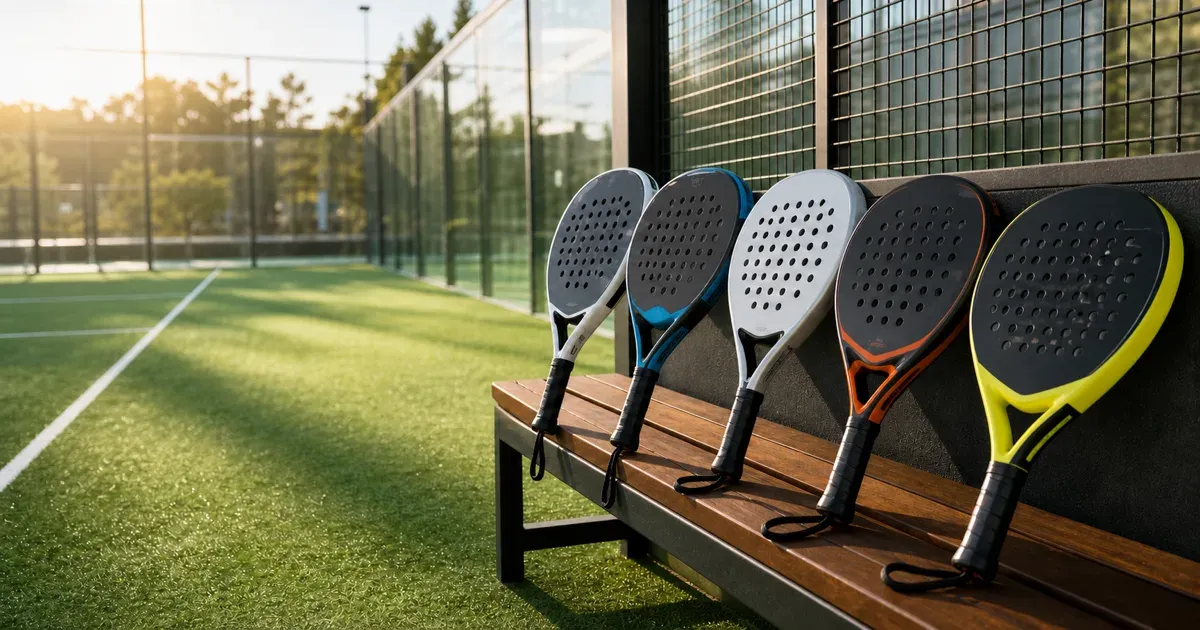
Buying your first padel racket is surprisingly easy to overthink.
You start by looking at a simple beginner model, then notice a carbon racket used by a professional player, then another one promising more power, more spin and a bigger sweet spot. Before long, you are comparing technologies you have never heard of and considering spending far more than you planned.
The truth is much simpler. During your first season, you need a racket that is comfortable, easy to move and forgiving when you do not hit the ball perfectly. Power is useful, but it is rarely the thing holding a beginner back.
For most new players, we would start with the adidas Drive Light 2026. It is round, easy to handle and does not demand a fast or technically perfect swing. That said, it is not the right choice for everyone. Someone moving over from tennis may prefer the faster feel of the Babolat Air Vertuo 2.6, while a player who wants as much control as possible may be happier with the NOX X-Zero 2026.
Here are the five rackets we would genuinely consider for a first season.
The five beginner rackets worth considering
adidas Drive Light 2026
The easiest recommendation for most beginners
NOX X-Zero 2026
The best choice when control and forgiveness come first
Wilson Optix V2 Lite
A light, quick racket that is easy to prepare at the net
HEAD Evo Speed
A softer option for beginners who want a little more help with power
Babolat Air Vertuo 2.6
The most natural fit for players coming from tennis, squash or badminton
What makes a good beginner padel racket?
A beginner racket should make ordinary shots feel easier. You should be able to prepare it quickly, defend without forcing the swing and finish a session without your forearm feeling destroyed.
That usually means choosing a round or forgiving teardrop shape, a soft face and a manageable balance.
Round is the safest shape for most beginners
A round racket normally has a larger, more central sweet spot. When your timing is still inconsistent, that extra margin helps. You will not always meet the ball exactly where you intended, especially when defending after the glass or reacting to a fast volley.
Teardrop rackets move the sweet spot slightly higher and usually offer a little more easy power. They can work very well for athletic beginners and people who already play another racket sport.
Diamond-shaped rackets are a different story. They are usually more demanding, more head-heavy and less forgiving away from the centre. They may look exciting, but they are rarely the best place to start.
Balance matters as much as the number on the scale
Most adult padel rackets sit somewhere in the mid-300-gram range. That does not mean they all feel the same.
A 355 g racket with a low or even balance can feel quicker than a lighter racket with most of its weight near the top. This is why buying purely by weight can be misleading.
Players with a smaller build, less upper-body strength or a history of elbow discomfort should usually lean towards a lighter, lower-balance model. Stronger players may appreciate a little more stability, provided the racket still feels easy to move.
Soft materials are not a downgrade
Beginners are often drawn to carbon because it sounds more premium. In reality, a softer fibreglass face is usually easier to play with.
Fibreglass flexes more at contact and helps the ball leave the face without a violent swing. That is useful when learning returns, lobs and compact volleys. A stiff carbon racket can feel precise in experienced hands, but it is not automatically better for someone still developing a consistent contact point.
1. adidas Drive Light 2026: the one we would recommend to most beginners
The adidas Drive Light 2026 gets the basics right.
It has a round shape, an even balance and a published weight range of 345 to 360 g. The fibreglass face and Soft Performance EVA core give it a softer response than the stiff, competition-focused rackets many beginners are tempted to buy.
On court, that kind of setup makes life easier. The central sweet spot gives you more room for error, and the even balance helps when you need to move quickly between a forehand and backhand volley. It should also feel manageable when you are defending from the back of the court and trying to lift a controlled lob rather than hit your way out of trouble.
It is not designed to produce huge overhead power, and an experienced player may eventually want something firmer. For a first racket, however, that is hardly a weakness. The adidas Drive Light 2026 lets you concentrate on spacing, preparation and shot selection instead of fighting the racket.
For a player buying a first racket with no strong preference yet, this is where we would start.
2. NOX X-Zero 2026: for players who want control above everything else
Some beginners want more power from day one. Others simply want the ball to go where they intended. The NOX X-Zero 2026 is for the second group.
It is a round racket weighing 350 to 360 g, with a 3K fibreglass face, HR3 White EVA core and carbon frame. More importantly, it is built around a broad, forgiving hitting area.
That makes it a reassuring racket when you are learning to return serve, defend after the back glass or play a high lob under pressure. Off-centre contact will still feel like off-centre contact, but the racket is less likely to punish every small timing mistake.
The NOX X-Zero 2026 is not especially flashy. It does not try to turn every overhead into a winner, and strong tennis players may find it a little conservative. For learning how to construct a point and keep the ball in play, that calm response is exactly what many beginners need.
It is the better pick if your main aim is to become more consistent before worrying about attacking power.
3. Wilson Optix V2 Lite: the easiest racket to move quickly
The Wilson Optix V2 Lite is a good option for anyone who feels rushed at the net or tires quickly with a heavier-feeling racket.
It has a round shape, a large sweet spot and a weight of around 355 g. Its low-balance feel is what makes the difference. The racket is easy to bring back in front of the body after a volley and does not need much effort to move from the forehand side to the backhand side.
That quick handling can be especially helpful during the first few months, when footwork and racket preparation do not yet happen automatically. It also suits players who prefer compact swings and do not want a lot of weight pulling the racket head through the ball.
The trade-off is that it may feel less solid when blocking a very fast shot. A heavier racket can absorb pace more naturally, but it also asks more from your shoulder and forearm. For many recreational beginners, the Wilson Optix V2 Lite strikes a sensible balance.
It makes the most sense for players who care more about quick handling and arm comfort than maximum stability.
4. HEAD Evo Speed: a soft beginner racket with easier power
Despite the name, the HEAD Evo Speed is not an unforgiving speed racket intended only for aggressive players. It sits in HEAD's recreational range and is designed to help newer players generate depth without swinging excessively hard.
It uses a teardrop shape, fibreglass face and soft foam, with a published weight of 352 g. Compared with the round rackets above, its higher balance puts a little more mass behind the ball.
That can be useful if your shots regularly land short or you struggle to create depth from the back of the court. The racket gives you more help than a control-first model, particularly on overheads and attacking volleys.
The same balance also makes it slightly more demanding to move. If you are often late to the ball or already have a sensitive elbow, the adidas Drive Light 2026 or Wilson Optix V2 Lite will probably feel easier. If you are reasonably strong and want a forgiving racket with a little extra punch, the HEAD Evo Speed makes more sense.
This is the option for a beginner who wants some help with depth but is not ready for a stiff attacking racket.
5. Babolat Air Vertuo 2.6: the best fit for tennis and racket-sport players
Players coming from tennis, squash or badminton often have a different first-racket problem. They already know how to accelerate a racket, but they need to shorten the swing and adapt to padel's faster exchanges and use of the glass.
The Babolat Air Vertuo 2.6 suits that transition well. It weighs 345 g, with the usual manufacturing tolerance, and combines a teardrop shape, fibreglass face, carbon frame and Black EVA core.
It feels quick through the air and provides more easy pace than a typical round control racket. That makes it enjoyable for players who already have decent timing and do not need the most forgiving possible setup.
It is also the most expensive racket in this group, and a complete beginner does not need to spend that much to start playing well. You are paying for a more refined, performance-oriented feel rather than a dramatic shortcut to better padel.
It earns its place here as the best option for someone with racket-sport experience who does not want to replace their first padel racket after a few months.
So, which one should you buy?
For most people buying their first padel racket, the adidas Drive Light 2026 is the easiest answer. It is forgiving, comfortable and simple to handle.
Go for the NOX X-Zero 2026 when your priority is keeping the ball under control. Pick the Wilson Optix V2 Lite when you want something quick and easy on the arm. The HEAD Evo Speed is better when you need help generating depth, while the Babolat Air Vertuo 2.6 makes the most sense for someone who already has experience with tennis or another racket sport.
Still unsure? Think about the problem you notice most often:
- If you keep missing the centre, choose the NOX X-Zero 2026.
- If you are late at the net, choose the Wilson Optix V2 Lite.
- If your shots regularly land short, choose the HEAD Evo Speed.
- If you have no idea yet what kind of player you are, choose the adidas Drive Light 2026.
- If you already swing a tennis racket confidently, choose the Babolat Air Vertuo 2.6.
That is a much better way to choose than buying whichever racket has the longest list of technologies on the product page.
A few mistakes worth avoiding
Do not buy the racket used by your favourite professional
Professional rackets are built for players with excellent timing, fast preparation and plenty of strength. The same racket can feel stiff, tiring and unforgiving in the hands of a beginner.
Do not assume expensive means easier
Higher-priced rackets often use stiffer materials and more specialised shapes. Those features may be useful later, but they can make the learning process harder now.
Do not add three overgrips before playing
Padel handles often feel thin, particularly if you come from tennis. Add one overgrip, play a session and see how your hand feels. A grip that is too thick can make quick changes of direction awkward.
Check the exact listing before ordering
Amazon and other marketplaces frequently mix older model years, similar colourways and products with almost identical names. Confirm the model, weight range, seller and return policy before buying. A racket cover is not always included either.
Frequently asked questions
Is a round padel racket always best for a beginner?
It is the safest starting point for most beginners because the sweet spot is usually larger and closer to the centre. A teardrop racket can still be a good choice when you already have racket-sport experience or want a little more help with power.
What weight should my first padel racket be?
Many adults are comfortable somewhere between 345 and 365 g. Balance matters just as much, though. A low-balance 355 g racket may feel easier to move than a lighter racket with more weight near the head.
Is fibreglass better than carbon for beginners?
Usually, yes. Fibreglass tends to feel softer and more forgiving. Carbon is stiffer and can offer greater precision, but it is not automatically an upgrade when your contact point is still inconsistent.
How much should I spend on my first racket?
Spend enough to buy a proper adult racket from a recognised brand, but do not feel pressured to buy a premium model. A comfortable beginner racket will usually help you more than an expensive professional one.
Our final pick
The adidas Drive Light 2026 is the best first padel racket for most beginners. It does not try to impress you with an aggressive shape or professional-level stiffness. It simply gives you a comfortable, forgiving platform for learning the game.
That is what a first racket should do. It should help you prepare earlier, relax your grip and play one more controlled ball back over the net. The power and expensive carbon can come later.
Our editorial process
How we research and review our content
Our research process depends on the subject. We select the sources that can answer the article's actual question, cross-check important claims, and distinguish documented facts from editorial judgement.
- Practical context and direct experience
- We draw on our team's experience of sports, equipment, and organising competitions when it is relevant. Direct use informs our judgement only where it actually occurred; we do not present research as hands-on testing.
- Primary and authoritative sources
- Depending on the topic, we consult governing-body rules, official guidance, manufacturer specifications and manuals, standards, technical documentation, and other first-party sources.
- Independent and public evidence
- For comparisons and recommendations, we may examine specialist reviews, public customer feedback, retailer information, ratings, and recurring real-world issues. We cross-check patterns and never treat one comment or score as proof.
- Editorial review and updates
- We compare the available evidence with the reader's likely needs, explain uncertainty and trade-offs, verify important claims, and update content when rules, products, features, or source information change.
Share this article
Send this guide to someone who might find it useful.

About the author
Fixture.cc editorial team
The Fixture.cc editorial team is a global group of sports enthusiasts creating practical, trustworthy guides for sports fans, competition organisers, coaches, and teachers.
View editorial profileKeep reading
Related articles
Best Cameras for Recording Youth Football Matches in 2026
Five cameras for filming youth football from the sideline, chosen for battery life, wide field of view, stabilization, and standing up to a wet touchline.
5 Best Pickleball Paddles for Every Playing Style
Five current pickleball paddles for control, value, quick handling, power and premium play, with practical advice on choosing the right shape.
5 Best Budget Gaming Monitors Under USD 200 for Esports
Five gaming monitors under USD 200 with refresh rates and response times suited to competitive esports, from compact displays to 1440p options.