5 Best Footballs to Buy for Matches and Training in 2026
Five current footballs for matches, training, club sessions and casual play, with clear advice on FIFA ratings, construction, size and value.
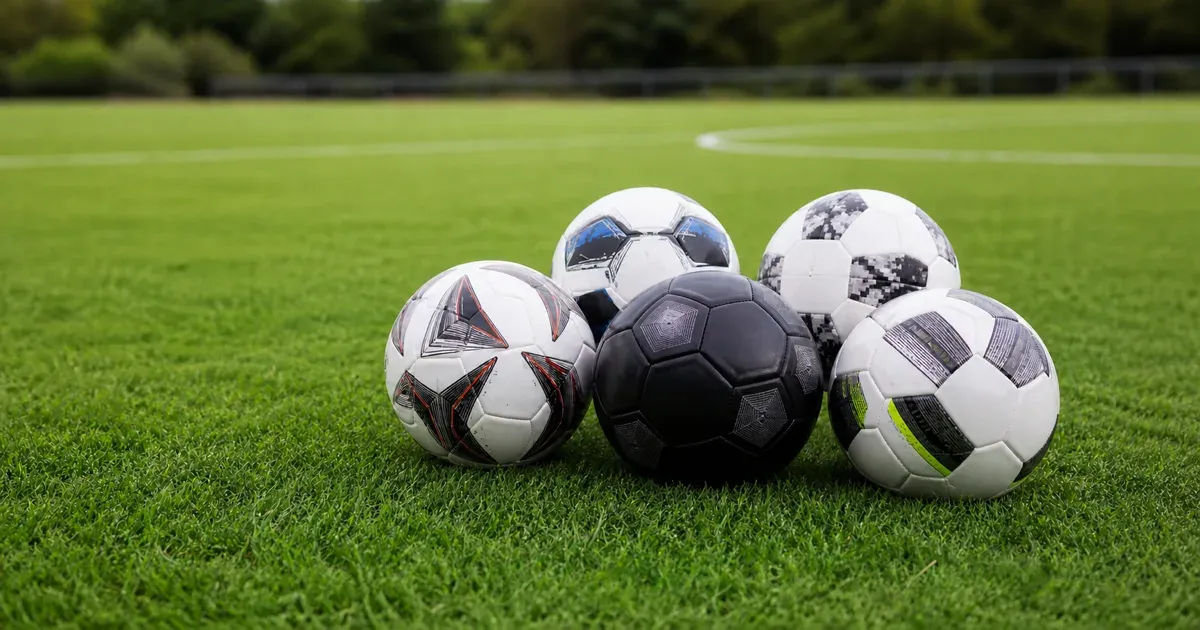
A good football should disappear into the game. You should be thinking about your first touch, the next pass or where to put a free kick - not wondering why the ball feels flat, flies unpredictably or needs pumping up again.
The challenging part is that many footballs share almost identical graphics. The official match ball, the competition version, the league version and the cheapest club version can all look alike in photographs while feeling completely different on the pitch.
For most players, the adidas FIFA World Cup 26 Trionda League Ball is the best place to start. It is current, FIFA Quality approved and designed to cover both training and matches without the price of the official World Cup ball. Players who want a genuine FIFA Quality Pro option should look at the PUMA Orbita 2 Football, while the Nike Academy Soccer Ball remains the straightforward choice for repeated practice.
These are the five balls we would consider in 2026.
The five best footballs at a glance
adidas FIFA World Cup 26 Trionda League Ball
The best all-round choice for training and ordinary matches.
PUMA Orbita 2 Football
The best match-level option without paying official-match-ball prices.
Nike Academy Soccer Ball
The practical choice for drills, school football and frequent use.
SELECT Numero 10
The traditional hand-stitched club ball.
adidas Tiro League Ball
A durable, textured workhorse for regular training.
What should you look for in a football?
The tournament logo is the least useful part of the buying decision. Size, construction, certification and the surface you play on matter far more.
Start with the correct size
Size 5 is the standard choice for adult football and most older teenagers. Younger age groups usually play with size 4 or size 3, although the exact changeover depends on the league or national association.
Do not rely on the product photograph. Retailers often place several sizes on the same listing, and the selected option may not be the one shown in the image. Check the size before ordering, especially when buying for a child or an entire team.
Understand what the FIFA mark means
FIFA uses three quality marks for footballs: FIFA Basic, FIFA Quality and FIFA Quality Pro.
FIFA Basic covers minimum requirements for performance, accuracy, safety and durability. FIFA Quality adds more demanding testing, particularly around consistent performance and extended use. FIFA Quality Pro is the highest standard and is intended for top-level play.
That hierarchy is useful, but it should not make the decision for you. A FIFA Quality Pro ball can be excellent in a match and still be an unnecessary purchase for wall practice, muddy winter sessions or daily use on abrasive artificial turf.
Match the construction to the job
Thermally bonded and high-frequency moulded balls avoid exposed stitching and are designed to hold a consistent shape while limiting water absorption. They tend to suit competitive play and wet conditions.
Laminated and TSBE constructions occupy a useful middle ground. They can provide a clean, consistent surface without pushing the price into official-match-ball territory.
A well-made hand-stitched ball is not outdated. It can be durable, comfortable to strike and ideal for club use. The trade-off is that exposed seams generally need more care than a premium bonded shell.
Think about where the ball will spend most of its life
A ball used once a week on natural grass has an easier life than one struck against a wall every evening. Rough artificial surfaces, concrete, fences and wet storage all speed up wear.
For a club or regular player, owning one good match ball and a tougher training ball often makes more sense than asking one expensive ball to survive everything.
Do not overlook the bladder
Butyl bladders are popular because they retain air well. Latex bladders often feel lively and responsive but usually need checking more frequently.
Neither is automatically superior. Reliable air retention is valuable for a ball kept in a kit bag, while a player who cares most about touch may accept having to use the pump more often.
1. adidas FIFA World Cup 26 Trionda League Ball: the best football for most players
The adidas FIFA World Cup 26 Trionda League Ball is the sensible version of the ball everyone will recognise in 2026.
It borrows the flowing graphics of the official World Cup match ball but uses a more affordable laminated TPU construction and a butyl bladder. adidas positions it for both matches and training, and the FIFA Quality mark confirms that it has passed tests for areas including weight, circumference, rebound, water absorption and pressure retention.
The important word in the name is “League”. This is not the adidas FIFA World Cup 26 Trionda Pro Ball used at the tournament. It is the more practical consumer version: less expensive, easier to justify for regular use and still built to a meaningful performance standard.
Its surface includes fine texture and debossed details intended to improve control and flight stability. You are unlikely to notice those features during a casual five-a-side game, but they become more relevant when passing firmly over distance or striking through the ball.
The main reason to choose it is balance. It is good enough for a proper match, durable enough for normal training and current enough that finding the correct model should be easier than hunting for a previous-season Champions League ball.
Players who compete at a high level may prefer the firmer and more exact response of the PUMA Orbita 2 Football. For most adults, teams and families, however, the adidas FIFA World Cup 26 Trionda League Ball is the best all-round buy.
2. PUMA Orbita 2 Football: the best choice for serious matches
The PUMA Orbita 2 Football is the ball to choose when match performance matters more than having the design from a famous tournament.
Its FIFA Quality Pro certification places it at the highest testing level in this list. PUMA uses a high-frequency moulded construction, a balanced 32-panel layout, a textured 1.2 mm polyurethane surface, POE foam and a rubber bladder with its PAL air-lock valve.
That is a lot of product language, but the practical result is simple: this is meant to stay round, hold air and fly consistently when the pace increases. The foam layer gives it a firm response without making every touch feel harsh, while the textured outer is designed to help the ball remain predictable through the air.
It makes the most sense for organised eleven-a-side matches, stronger players and teams that will look after it. It is harder to recommend for casual use because much of what you are paying for disappears during slow drills or kickabouts on rough ground.
There is also no point buying a high-level ball and then leaving it wet in the boot of a car. Keep it properly inflated, clean off heavy mud and use a cheaper ball for the worst surfaces.
For match day, the PUMA Orbita 2 Football offers the strongest specification here without jumping to the price of an official tournament match ball.
3. Nike Academy Soccer Ball: the dependable training ball
Not every session needs a premium ball. Sometimes you need something that can take hundreds of passes, repeated shooting drills and the occasional collision with a fence.
That is where the Nike Academy Soccer Ball fits.
Nike uses debossed OmniSculpt grooves to manage airflow and provide a truer flight. The current generic model is available in sizes 3, 4 and 5, making it easy to buy the same type of ball for different age groups.
The casing combines rubber, polyurethane, polyester and EVA. It is not presented as an elite match ball, and that is part of its appeal. You can use it regularly without treating every scuff as a disaster.
It works well for passing drills, shooting practice, school football and families that want a recognisable ball at a reasonable price. Coaches can also replace one without having to introduce a completely different feel into training.
The Nike Academy Soccer Ball is not the best choice for an important competitive match. It lacks the top certification and more sophisticated construction of the PUMA Orbita 2 Football. It is also less distinctive than the SELECT Numero 10 if you prefer the touch of a hand-stitched ball.
For everyday practice, though, it does exactly what most players need.
4. SELECT Numero 10: the hand-stitched club favourite
The SELECT Numero 10 has remained popular because it feels like a proper club football rather than a cheap imitation of a professional match ball.
Its 32 panels are stitched by hand, and the polyurethane synthetic-leather outer is backed by a 2 mm foam layer. Inside, SELECT uses a Zero-Wing latex bladder. The size 5 version carries FIFA Basic approval.
On paper, FIFA Basic sits below the certifications on the two leading match options above. On the pitch, the construction gives the SELECT Numero 10 a character of its own: a lively bounce, a slightly softer touch and the familiar flight of a traditional 32-panel ball.
It is particularly well suited to clubs, schools and players who divide their time between training and local matches. SELECT describes it as using the same basic structure as its top Brillant Super ball, which helps explain why it has built such a long-standing reputation.
The latex bladder is worth noting. Check the pressure before playing because it may need topping up more often than a butyl-based ball. The hand-stitched seams also deserve sensible care, especially after wet sessions.
Choose the SELECT Numero 10 when touch, traditional construction and club durability matter more to you than owning the highest FIFA mark.
5. adidas Tiro League Ball: the no-nonsense training workhorse
The adidas Tiro League Ball is less glamorous than the World Cup design, but it may be the better purchase for a player who trains several times a week.
adidas gives it a textured TPU surface and FIFA certification. It is designed for focused training as well as game-day use, placing it above the cheapest recreational balls without turning it into something you feel guilty about using on an ordinary Tuesday evening.
The texture is noticeable during close control and firm passing, particularly when the weather is damp. It also gives the ball a more substantial feel than many smooth, machine-stitched training models.
The adidas Tiro League Ball makes most sense for regular club sessions, repeated technical work and players who care more about consistency than tournament graphics. It is also easier to buy several matching balls for a team than it would be with a premium match model.
The exact colourway may vary between retailers, so check that the listing is for the League version rather than a cheaper Club or Training version. The names can look very similar in search results.
For a straightforward football that can handle regular work, the adidas Tiro League Ball is difficult to fault.
Which football should you buy?
For most people, buy the adidas FIFA World Cup 26 Trionda League Ball. It offers the best mix of current design, useful certification, air retention and versatility.
Choose differently when your use is more specific:
- For serious competitive matches, choose the PUMA Orbita 2 Football.
- For frequent drills, school football or family use, choose the Nike Academy Soccer Ball.
- For a traditional hand-stitched feel, choose the SELECT Numero 10.
- For a durable club-training workhorse, choose the adidas Tiro League Ball.
- For one ball that can move between training and ordinary matches, choose the adidas FIFA World Cup 26 Trionda League Ball.
The best ball is the one that suits the surface and level you actually play on. A professional specification is wasted if the ball spends most of its time hitting concrete.
Football-buying mistakes to avoid
Buying the design without checking the tier
The official match ball and the cheapest replica often carry almost identical graphics. Look for words such as Pro, Competition, League, Training and Club.
Those labels are not decorative. They usually indicate different materials, construction methods and certifications.
Paying for a match ball and using it everywhere
A premium ball will still suffer on concrete, rough artificial turf and wire fencing. Keep a tougher training ball for abrasive surfaces if you want your match ball to last.
Assuming every size 5 ball feels the same
Two legal size 5 balls can feel noticeably different because of the outer material, foam backing, panel construction and inflation pressure. Certification narrows the acceptable range but does not make every model identical.
Ignoring inflation pressure
A good ball can feel terrible when it is too soft or too hard. Use the pressure range printed near the valve, and check it before matches rather than relying on a squeeze with your thumbs.
Insert the needle carefully and moisten it first to reduce the chance of damaging the valve.
Leaving a wet ball in a closed bag
Wipe off heavy mud and let the ball dry naturally at room temperature. Do not place it directly against a heater, and do not store it permanently underinflated or crushed beneath other equipment.
Frequently asked questions
What is the best football to buy in 2026?
The adidas FIFA World Cup 26 Trionda League Ball is the best all-round option for most players. It is current, FIFA Quality approved and suitable for both training and normal match use without the cost of the official World Cup ball.
What is the difference between a League ball and a Pro ball?
A Pro ball is normally the official or highest-specification version, with premium construction and FIFA Quality Pro certification. A League ball is an affordable replica tier designed for regular players. It usually gives up some high-end construction while retaining a recognisable design and a useful level of performance.
Always check the individual specification because brands do not use every tier name in exactly the same way.
Is FIFA Quality Pro worth the extra money?
It is worthwhile for competitive matches, strong players and teams that value the most consistent possible flight and rebound. For training, casual football and rough surfaces, a FIFA Quality or good training ball normally offers better value.
What size football do adults use?
Adults normally use a size 5 football. Junior competitions may use size 4 or size 3 depending on the players' ages and local rules.
Are hand-stitched footballs still good?
Yes. A well-made hand-stitched ball can be durable and pleasant to strike. The SELECT Numero 10 is a good example. Bonded and moulded constructions usually offer better water resistance and more consistent seams, but they are not automatically the right choice for every player.
How often should a football be inflated?
Check the pressure before every important session or match. A butyl bladder may hold air for a long time, while a latex bladder often needs topping up more regularly. Always follow the pressure range printed on the ball.
Our final pick
The adidas FIFA World Cup 26 Trionda League Ball is the football we would recommend to most buyers in 2026. It is recognisably current without being a collector's purchase, and its laminated construction, butyl bladder and FIFA Quality status make it suitable for real use rather than display.
Buy the PUMA Orbita 2 Football when match-level performance is the priority. Pick the Nike Academy Soccer Ball or adidas Tiro League Ball for repeated training, and choose the SELECT Numero 10 when you prefer a traditional hand-stitched feel.
Whichever ball you choose, order the correct size, inflate it to the printed pressure range and keep it away from the surfaces that ruin good footballs fastest.
Our editorial process
How we research and review our content
Our research process depends on the subject. We select the sources that can answer the article's actual question, cross-check important claims, and distinguish documented facts from editorial judgement.
- Practical context and direct experience
- We draw on our team's experience of sports, equipment, and organising competitions when it is relevant. Direct use informs our judgement only where it actually occurred; we do not present research as hands-on testing.
- Primary and authoritative sources
- Depending on the topic, we consult governing-body rules, official guidance, manufacturer specifications and manuals, standards, technical documentation, and other first-party sources.
- Independent and public evidence
- For comparisons and recommendations, we may examine specialist reviews, public customer feedback, retailer information, ratings, and recurring real-world issues. We cross-check patterns and never treat one comment or score as proof.
- Editorial review and updates
- We compare the available evidence with the reader's likely needs, explain uncertainty and trade-offs, verify important claims, and update content when rules, products, features, or source information change.
Share this article
Send this guide to someone who might find it useful.

About the author
Fixture.cc editorial team
The Fixture.cc editorial team is a global group of sports enthusiasts creating practical, trustworthy guides for sports fans, competition organisers, coaches, and teachers.
View editorial profileKeep reading
Related articles
Best Cameras for Recording Youth Football Matches in 2026
Five cameras for filming youth football from the sideline, chosen for battery life, wide field of view, stabilization, and standing up to a wet touchline.
5 Best Pickleball Paddles for Every Playing Style
Five current pickleball paddles for control, value, quick handling, power and premium play, with practical advice on choosing the right shape.

5 Best Budget Gaming Monitors Under USD 200 for Esports
Five gaming monitors under USD 200 with refresh rates and response times suited to competitive esports, from compact displays to 1440p options.